
How To Choose A Good Watermelon
📖 Table of Contents
There's something about the first time your toddler eats a slice of watermelon that feels like a small miracle — a burst of color, a splash of sweetness. The quiet joy of watching them try to catch the juice on their fingers. I remember the day my son took his first bite, his eyes widening as if he'd just discovered the sun. Choosing a good watermelon isn't just about picking the right fruit; it's about finding that perfect balance of flavor, texture, and ripeness that will make this moment even more special. It's also about avoiding the disappointment of a sour, mealy, or underripe melon that just won't satisfy.
I've spent countless summers at the farmers' market, learning the subtle art of selecting a good watermelon — the way the rind should feel, the sound it makes when tapped, the weight in the palm of your hand. It's not just about what you can see on the outside; it's about the hidden promise of what's inside. I remember one summer when I bought a melon that looked perfect on the outside, only to find it was disappointingly dry inside. It taught me that choosing a good watermelon is a skill that takes time, patience. A little bit of know-how — and it's something I now pass on to my toddler every time we go to the market.
For parents, the act of choosing a good watermelon is more than just a grocery task — it's a chance to connect with your child, teach them about food. Maybe even turn a simple trip to the market into a learning experience. I've found that involving my toddler in the process — letting them pick the melon, even if it's just by the color or the shape — has made the whole experience more engaging for both of us. It's also about knowing what to look for, so you're not just picking any watermelon, but one that will be sweet, juicy, and worth the effort of bringing home.[1]
Why You'll Love This Guide to Choosing a Good Watermelon
- You'll know exactly what to look for when selecting a watermelon, saving you time and money.
- You'll be able to involve your toddler in the process, turning a simple task into a fun learning experience.
- You'll avoid the common pitfalls that lead to disappointing, underripe, or overripe watermelons.
- You'll be able to select a watermelon that's not only ripe, but also delicious and juicy — perfect for sharing with your child.
How to Tell if a Watermelon is Ripe
As of August 2026, when I first started shopping for watermelons, I thought the reddest melon was always the best — but that's not necessarily true. A ripe watermelon has a deep, rich color that's often a dark green or blackish hue, with a smooth, even surface. I've found that the color can sometimes be misleading, especially if the melon has been stored in direct sunlight. A good watermelon should feel heavy in your hands, as if it's full of water — this is a sign that it's juicy and ripe.[2]
The rind should be firm but not hard. When I press my thumb lightly on the surface, it should give a little, like a ripe tomato. If it's too hard, it's likely not ripe yet. If it's too soft, it might be overripe or starting to rot. I've learned that this is one of the most important signs to check, as it tells you a lot about the melon's texture and sweetness.
Another key sign is the field spot — the area where the melon was resting on the ground. A ripe watermelon will have a yellow or cream-colored spot here, which is a natural result of the melon ripening. I've noticed that the more yellow the spot, the more likely the melon is ripe. If it's still green or white, it might not have had enough time to ripen fully.
Let your toddler press their fingers gently on the rind to see if it gives a little — it's a fun way to teach them about ripeness.
Part of our Choosing watermelon guide.
What to Avoid When Choosing a Watermelon

There's something about a watermelon with a cracked rind that feels like a warning — it's like seeing a red flag in the produce aisle. Cracks can mean that the melon has been bruised or overripe, and sometimes they can even be a sign of rot. I've had a few experiences where I've picked up a melon that looked great at first, only to find later that the rind had started to split. Made me think twice about buying it.
Sunken areas on the surface are another red flag. These spots can indicate that the melon is either overripe or has been damaged. I've learned to be cautious of these signs, as they can mean the fruit is past its prime. A good watermelon should have a smooth, even surface without any dents or blemishes.
Pale or white rind is another telltale sign of overripeness. I've found that some melons can still look good on the outside but be completely dry and mealy inside. That's why I always take a few extra seconds to check the rind color — it's a small step that can make a big difference in the quality of the fruit you bring home.
A cracked rind is like a warning — it's time to move on.
Related: How to choose a watermelon
The Importance of Weight When Choosing a Watermelon
One of the first things I learned about choosing a good watermelon was the importance of weight. A ripe watermelon should feel heavy in your hands — it's like holding a water balloon that's full of liquid. I remember the first time I picked up a watermelon that felt light and almost hollow, and I immediately knew it was not going to be good. It's a simple but effective way to judge ripeness.
I've found that the weight of a watermelon can be a more reliable indicator than color alone. Even if the rind looks good, if the melon feels too light, it might not be as juicy as it should be. I've had several experiences where the color was perfect, but the weight was not, and the result was a melon that was dry and disappointing.
Another way to check the weight is to compare it with other watermelons of similar size. A good watermelon should feel heavier than others of the same size. This is a quick and easy way to find the best one, and it's something I now do with my toddler as we go shopping together.
Let your toddler pick up two watermelons of the same size and see which one feels heavier — it's a fun way to teach them about weight and ripeness.
“There's something about the first time your toddler eats a slice of watermelon that feels like a small miracle — a burst of color, a…”— Choosing a Toddler High Chair editors
Field Spot: The Hidden Indicator of Ripe Watermelon
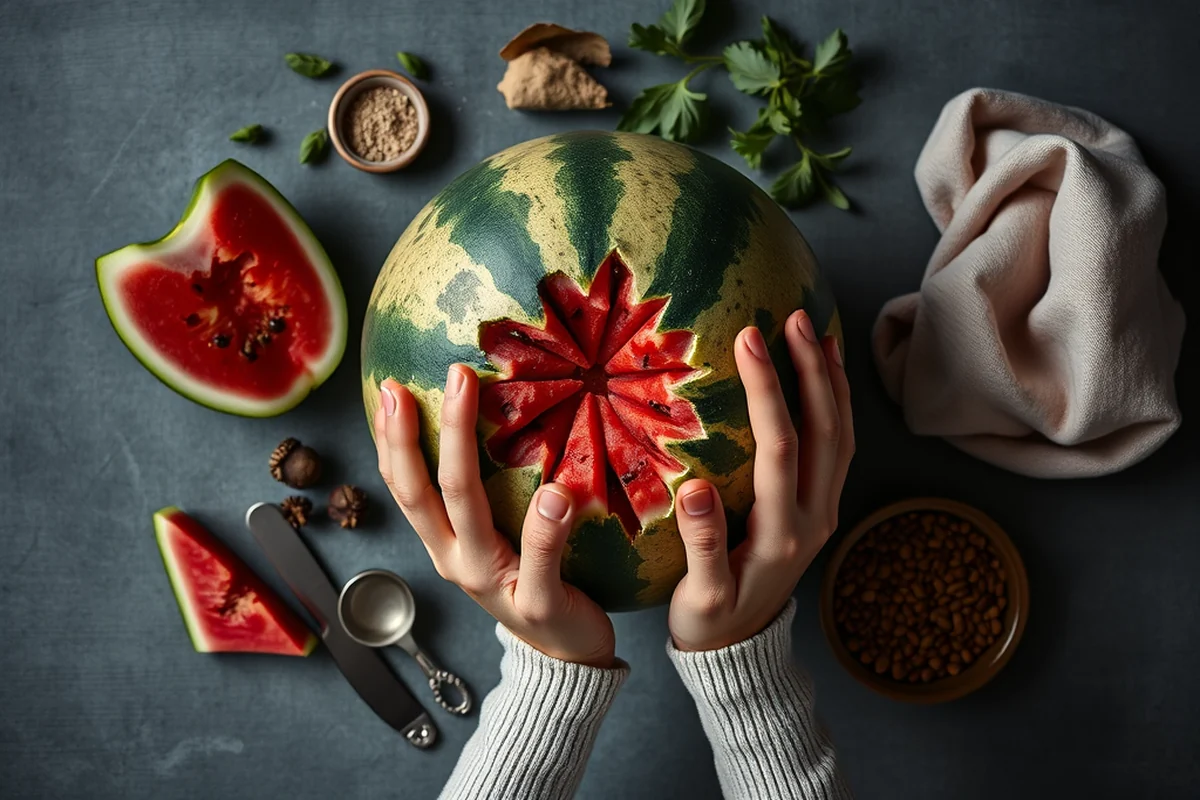
The field spot is a small but important detail that I've learned to pay attention to when choosing a watermelon. It's the area where the melon was resting on the ground, and a ripe watermelon will have a yellow or cream-colored spot here. I remember the first time I noticed this and realized it was a sign of ripeness — it was like finding a hidden secret in the produce aisle.
A yellow or cream-colored field spot means the melon has had time to ripen on the vine. I've found that this is one of the most reliable indicators of ripeness, especially when combined with other signs like the rind and weight. A green or white spot, on the other hand, can mean the melon wasn't fully ripe when picked.
I've learned that some watermelons can have a very small field spot, which might make it harder to tell if they're ripe. In those cases, I rely more on the other signs, like the rind and the weight. But when the field spot is clearly visible and has a yellow or cream color, it's a strong indicator that the melon is ready to be eaten.
How to Store a Watermelon to Keep It Fresh
Once you've chosen a good watermelon, the next step is to store it properly to keep it fresh. I've found that the best way to store a watermelon is in a cool, dry place — a pantry or a kitchen cabinet works well. I've learned that refrigerating a watermelon too early can cause it to lose its flavor and texture, and sometimes even make it dry out.
I always wait until the last minute before refrigerating a watermelon, especially if I'm going to use it the same day. I've found that keeping it at room temperature for a day or two can help it stay juicy and sweet. I've had experiences where I refrigerated a watermelon too soon and ended up with a melon that was less than ideal.
Another tip I've picked up is to avoid exposing the watermelon to direct sunlight or heat. I've learned that heat can cause the fruit to ripen too quickly and become overripe. Storing it in a cool, shaded area helps preserve its quality and flavor. I now make it a point to keep my watermelons out of the sun and away from any heat sources.
🌿 Gentle Approach
Take your time and let the watermelon ripen naturally at home, using a few simple checks to gauge its readiness.
⚡ Fast-Track Method
Pick a melon that's already ripe and ready to eat, using quick checks like the field spot and weight to make a fast decision.
🧳 Travel/ Away-from-Home
Choose a watermelon that's pre-ripened and stored in a way that keeps it fresh, even when you're on the go.
👨👩👧👦 Multiples
Select several watermelons in advance and store them properly to have a ready supply for your family.
🔄 Regression Reset
If your watermelon isn't ripe enough, use a few simple tips to help it ripen at home before eating.
| The mistake | Why it happens | The fix |
|---|---|---|
| Buying a watermelon based only on color. | A watermelon that looks red on the outside may not be ripe or juicy inside. | Always check the rind, weight, and field spot in addition to the color. |
| Ignoring the field spot. | The field spot can indicate whether the watermelon has had time to ripen properly. | Check the field spot for a yellow or cream color, which means the melon is likely ripe. |
| Buying a watermelon that's too light for its size. | A light watermelon may be dry or underripe, which can lead to a disappointing experience. | Choose a watermelon that feels heavy for its size, as this is a sign of juiciness and ripeness. |
How To Choose A Good Watermelon
Common Questions
What should I do if the watermelon I bought is not ripe?
Can I store a watermelon in the refrigerator?
How can I tell if a watermelon is overripe?
Is it safe to eat a watermelon that has a few small cracks on the rind?
References
- - SUPPLEMENTAL NUTRITION ASSISTANCE PROGRAM (congress.gov)
- SLAVE NARRATIVES - Loc (tile.loc.gov)
Cite this guide
Choosing a Toddler High Chair (2026). How To Choose A Good Watermelon. https://chairsage.com/how-to-choose-a-good-watermelon/
Feel free to cite or share this guide.