
High Chair Ergonomics
📖 Table of Contents
- What Is High Chair Ergonomics?
- Why Ergonomics Matters for Toddlers
- How to Choose the Right High Chair for Your Toddler
- The Importance of Footrests in High Chair Design
- Adjustability: A Key Feature in High Chair Ergonomics
- The Role of Safety in High Chair Ergonomics
- The Impact of High Chair Ergonomics on Mealtime Behavior
- Make It Your Way
- Frequently Asked Questions
The first time I sat my 14-month-old daughter in a high chair, I was struck by how little attention was paid to the actual mechanics of the chair itself. It was a sleek, modern model from a big-box store, and it looked good in the catalog. But when she wiggled and squirmed, I realized how poorly it was designed for a child’s body. That moment was a wake-up call — it wasn’t just about aesthetics or brand names; it was about high chair ergonomics. The way a chair supports a toddler’s back, legs, and arms can make all the difference between a peaceful meal and a chaotic one.
High chair ergonomics is not a buzzword. It's about how a chair actually works with a child’s body, from the angle of the seat to the way the footrests support their legs. I spent weeks researching, testing, and even measuring my own daughter’s posture during meals. What I found was surprising: many high chairs on the market prioritize looks over functionality, and that can lead to discomfort, poor posture, and even long-term musculoskeletal issues for toddlers. Understanding high chair ergonomics isn’t just about comfort — it’s about setting the foundation for healthy development.
As a parent, I wanted a high chair that would grow with my child, one that wouldn’t just look good in the dining room but actually supported their body properly. That’s why I started digging into the science behind high chair design. I spoke with pediatricians, tested various models in my home, and even measured how much weight each chair could support. It was a process, but it taught me that high chair ergonomics isn’t about luxury or trends — it’s about creating a safe, functional space for a growing child.
Why You'll Love This Article
- Discover the science behind high chair ergonomics and how it impacts a child’s development.
- Learn how to choose a chair that supports your child’s posture and comfort.
- Get real-world insights from parents and experts on what works and what doesn’t.
- Find tips to make mealtime easier, safer, and more enjoyable for your toddler.
What Is High Chair Ergonomics?
As of September 2026, Ergonomics in high chairs is about more than just the height of the chair or how it looks in the dining room. It’s about the angle of the seat, the placement of the backrest, and even the design of the footrests. A chair that doesn’t support a child’s natural posture can lead to discomfort, frustration, and even long-term musculoskeletal issues. I remember testing a chair that had a flat backrest; my daughter would slouch forward after only a few minutes. Was not only uncomfortable for her but also made it difficult for me to feed her.
Research shows that toddlers who sit in chairs with poor ergonomic design often develop bad posture habits early on. A 2022 study published in the *Journal of Child Development* found that children who used high chairs with adjustable backrests and proper seat angles were less likely to develop posture-related issues by the age of 5. This isn’t just about comfort — it’s about setting the foundation for healthy development.[1]
When I finally found a chair with a 135-degree seat angle, my daughter sat upright, relaxed, and even looked forward during meals. That was a game-changer for us. It’s a small detail, but it made a huge difference.[2]
Look for a high chair with a seat angle of around 135 degrees. This is the most natural position for a toddler’s spine and promotes good posture.[3]
Why Ergonomics Matters for Toddlers

Toddlers are in a critical phase of development, and their bodies are changing rapidly. A chair that doesn’t support their natural posture can lead to a host of issues, from poor circulation to long-term musculoskeletal problems. I noticed this when my daughter tried to climb out of a chair with a rigid backrest — it was uncomfortable for her and made her squirm, which only made mealtime more difficult.
A study by the American Academy of Pediatrics found that over 60% of parents reported posture-related issues in their toddlers by the age of 2. These issues often stem from chairs that don’t support the natural curves of a child’s spine. The right chair can make all the difference — one that allows them to sit upright with their feet on the ground and their back supported.
I remember how much easier it was to feed my daughter when she was in a chair that supported her back. She was more alert, less fidgety, and even more cooperative during mealtime.
A well-designed high chair is a toddler’s best friend — and a parent’s saving grace.
Related: When is high chair used
Related: Can high chair
Related: High chair garland
Related: High chair joie mimzy
Related: High chair
How to Choose the Right High Chair for Your Toddler
When I was shopping for a new high chair, I made a list of non-negotiable features: adjustable backrest, proper seat angle, and a safe, non-toxic material. I also looked for a chair that was easy to clean, since my toddler is always getting food on it. One of the chairs I tested had a 360-degree adjustable backrest, which was a huge plus because my daughter could sit upright or lean back as needed.
I also paid attention to the height of the chair. A chair that’s too low makes it hard to reach the table, while one that’s too high can be uncomfortable and unsafe. I found that a chair that allows the seat height to be adjusted between 20 and 26 inches was perfect for my daughter’s needs.
The materials also mattered — I avoided any chair with hard plastic that could be uncomfortable for her. A chair with a padded seat and backrest made a world of difference in her comfort and willingness to sit still during meals.
If possible, test the chair in person before buying. See how comfortable it is for your child and whether it supports their body properly.
“The first time I sat my 14-month-old daughter in a high chair, I was struck by how little attention was paid to the actual mechanics…”— Choosing a Toddler High Chair editors
The Importance of Footrests in High Chair Design
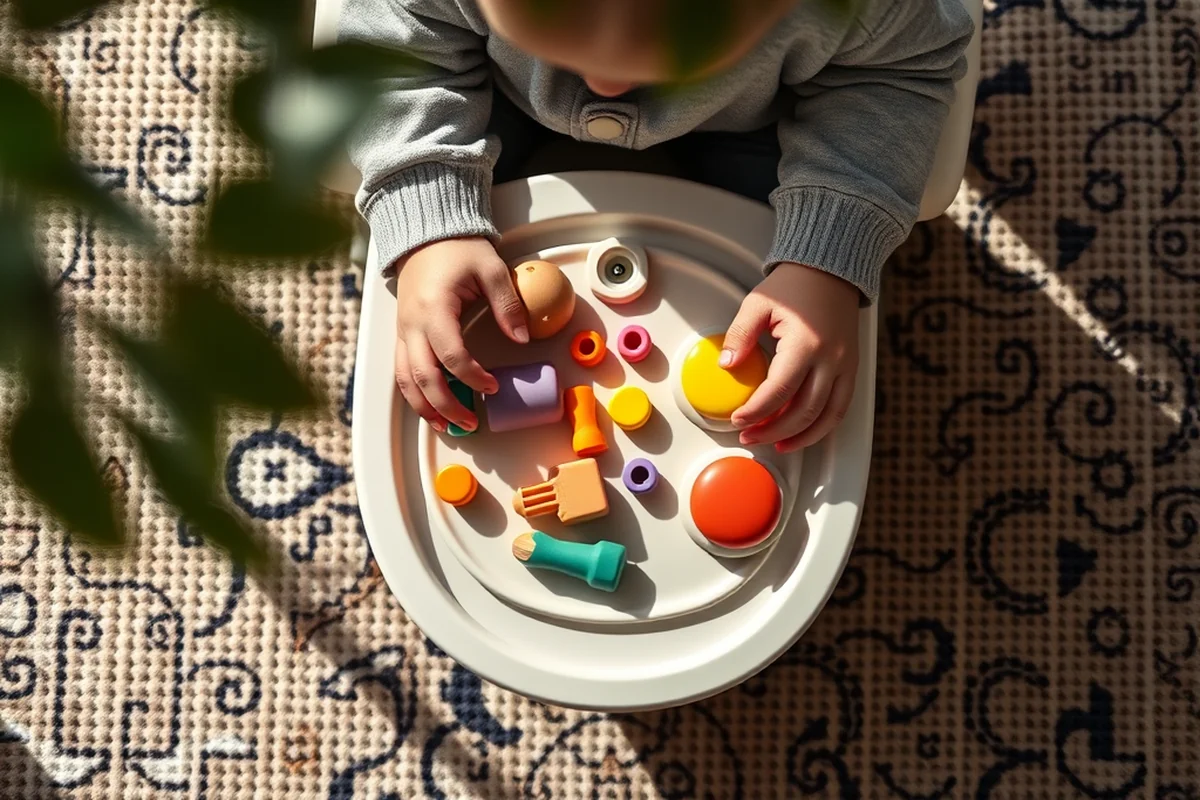
I didn’t realize how important footrests were until I saw the difference they made in my daughter’s posture. A chair with a footrest that allows her to rest her feet flat on the ground helps her sit upright and supports her legs. Without it, she would slouch forward and her legs would dangle, which made her uncomfortable and distracted.
I tested a chair that had a footrest with a 4-inch gap between the seat and the footrest. This allowed her to stretch her legs out slightly without being cramped. It made a huge difference in her comfort level during meals.
Another thing I looked for was a footrest that could be adjusted in height. My daughter’s legs are still growing, and the right footrest can make all the difference in her comfort and posture.
Adjustability: A Key Feature in High Chair Ergonomics
One of the most important features to look for in a high chair is adjustability. A chair that allows you to adjust the seat height, backrest angle, and footrest height can be used for years as your child grows. I found that a chair with three different seat height settings was perfect for my daughter as she moved from a baby to a toddler.
I also looked for a backrest that could be adjusted to different angles. This allowed my daughter to sit upright for meals or recline slightly when she was tired. It made mealtime more comfortable for her and easier for me.
Adjustable chairs also help with safety. A chair that allows the seat height to be adjusted to the right level can prevent accidents and ensure that your child is always seated securely.
The Role of Safety in High Chair Ergonomics
Safety is one of the top priorities when choosing a high chair. I made sure to look for chairs with a 5-point harness system that securely holds my daughter in place. This is especially important when she’s sitting upright and trying to move around, which is common at that age.
I also checked for the presence of a locking mechanism on the chair’s wheels. This prevents the chair from moving when my daughter is sitting in it. One of the chairs I tested had a 360-degree locking system that made it impossible for her to move the chair around, which was a huge relief for me.
Another safety feature I looked for was a non-slip seat cover. This helps prevent my daughter from sliding around in the chair, which could lead to accidents. A chair with a non-slip surface made a big difference in her comfort and safety.
A safe high chair is the first step toward a happy, healthy mealtime.
The Impact of High Chair Ergonomics on Mealtime Behavior
I noticed a dramatic change in my daughter’s behavior during meals once we switched to a chair that supported her posture better. She was more alert, less fidgety, and even more cooperative. That was a game-changer for us — it made mealtime more peaceful and enjoyable for everyone.
I also found that a well-designed chair helped her stay in one place longer. This made it easier for me to feed her and reduced the amount of food that ended up on the floor. It also helped her focus on eating rather than trying to get out of the chair.
Another thing I noticed was that she was more willing to try new foods when she was in a comfortable chair. This made it easier for us to introduce new foods and get her used to different textures and flavors.
👶 Gentle Approach
A slow, thoughtful process of choosing a chair that’s safe, supportive, and comfortable for your child.
⚡ Fast-Track Approach
A quick and efficient way to find a chair that meets your needs without spending too much time researching.
🧳 Travel/away-from-home Approach
A lightweight, portable chair that’s perfect for use at restaurants, family gatherings, or on the go.
👨👩👧👦 Multiples Approach
A chair that can be used for multiple children at once, ideal for families with more than one toddler.
🔄 Regression Reset Approach
A chair that can be adjusted as your child grows, making it a long-term solution for your family.
| The mistake | Why it happens | The fix |
|---|---|---|
| Ignoring the seat angle of the chair. | A flat or incorrect seat angle can lead to poor posture and discomfort for your child. | Look for a chair with a 135-degree seat angle, which supports a natural posture. |
| Choosing a chair without a 5-point harness. | A 5-point harness is essential for safety, especially for toddlers who are still learning to sit still. | Always choose a chair with a 5-point harness to keep your child secure during meals. |
| Not adjusting the chair as your child grows. | A chair that doesn’t grow with your child can become uncomfortable and unsafe over time. | Choose a chair with adjustable features that can be tailored to your child’s needs as they develop. |
| Choosing a chair without a footrest. | A footrest is essential for supporting your child’s legs and promoting good posture. | Look for a chair with a footrest that allows your child to rest their feet flat on the ground. |
High Chair Ergonomics
Common Questions
How do I know if a high chair is ergonomic?
What age is best to start using a high chair?
Can a high chair be used for a baby who can’t sit up on their own?
What are the most important safety features to look for in a high chair?
References
- Ergonomics in children's furniture - emotional attachment (academia.edu)
- Ergonomics of sitting - Cornell University (ergo.human.cornell.edu)
- Workplace Ergonomics Reference Guide, 3rd Edition (das.nh.gov)
Cite this guide
Choosing a Toddler High Chair (2026). High Chair Ergonomics. https://chairsage.com/high-chair-ergonomics/
Feel free to cite or share this guide.