How To Choose A Watermelon
📖 Table of Contents
There’s nothing quite like the burst of sweetness that comes from biting into a perfectly ripe watermelon. I still remember the first time I held one in my hands as a toddler, the way its heavy weight felt in my small arms and the thrill of watching my mom slice it open, revealing the bright red flesh inside. Choosing a watermelon now feels like a ritual of its own — one that I’ve learned the hard way, through trial and error, and a few bruised thumbs along the way.
As a parent, I’ve found that selecting the right watermelon isn’t just about taste or texture. It’s about finding a fruit that can hold up under the scrutiny of young hands, the curiosity of a child, and the sometimes unpredictable demands of everyday life. Over the years, I’ve developed a few tricks that have helped me pick the best watermelon — and I’m here to share them with you.
Whether you’re planning a summer picnic, a backyard barbecue, or simply want to treat your family to a sweet, refreshing snack, knowing how to choose a watermelon can make all the difference. It’s not just about picking the heaviest one off the stand or the one that looks the most vibrant. There’s a science to it, and a lot of it comes down to the small, often overlooked details that make the difference between a disappointing fruit and a juicy, flavorful treasure.[1]
Why You'll Love This Watermelon Selection Guide
- You’ll confidently pick the best watermelons every time.
- You’ll save time and avoid the disappointment of underripe fruit.
- You’ll create happy, fruit-filled memories with your kids.
- You’ll impress your friends and family with your summer savvy.
The Secret to Picking the Heaviest Watermelon
As of August 2026, one of the first things I learned was that a watermelon should feel heavy for its size. This is because watermelon is mostly water, and the more water it holds, the more weight it carries. I once bought a watermelon that looked perfectly round and vibrant, but when I picked it up, it felt lighter than I expected. That one didn’t last long — it was dry and disappointing.[2]
I’ve learned to lift each watermelon and compare it to others of the same size. The one that feels the heaviest is usually the best bet. I’ve taken my toddler to the market with me more than once, and she’s always fascinated by the heaviest ones. It’s become a game for us now — and a great way to teach her about weight, size, and the importance of feeling things.
I’ve also noticed that watermelons that are too light can be a sign of dryness or poor storage. If you’re shopping with kids, this is a great teaching moment — and it makes the experience more interactive and memorable.
Take your toddler to the market and have them help you choose the heaviest watermelon. It’s a fun and educational activity that keeps them engaged and excited.
Part of our Choosing watermelon guide.
Checking the Stem and the Rind
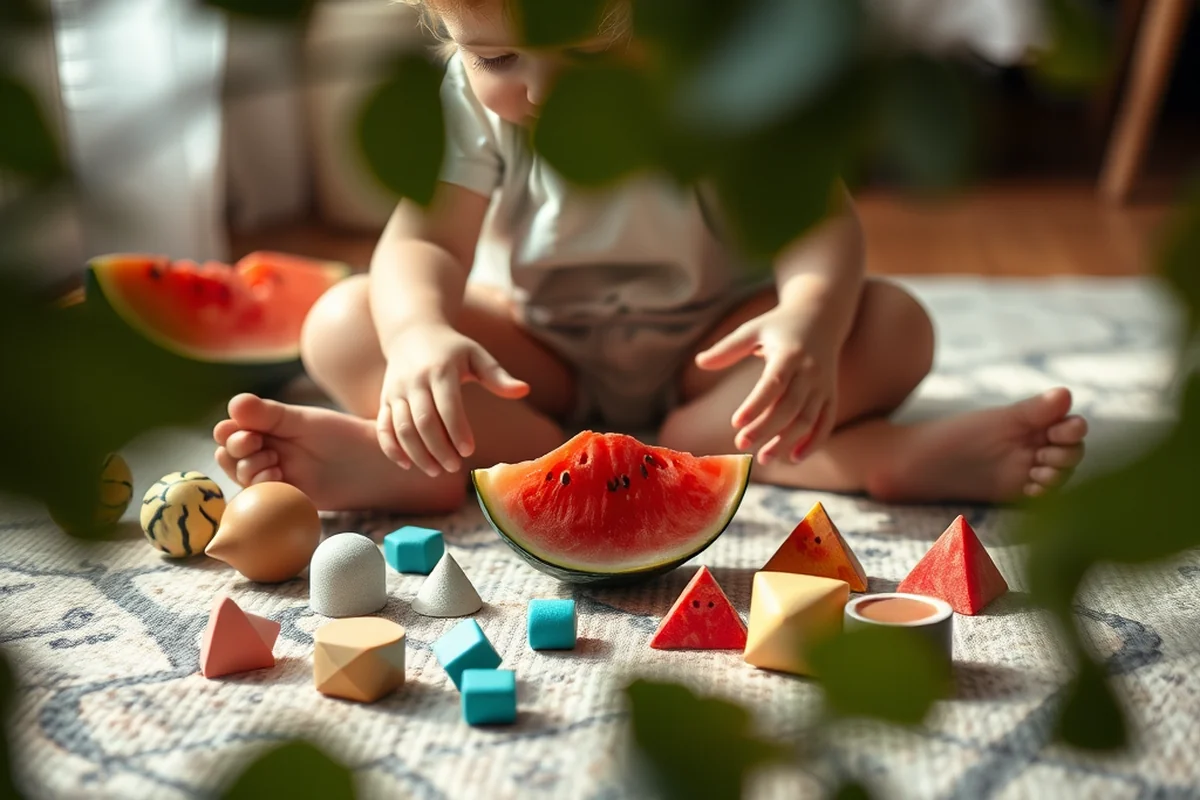
The stem and the rind of a watermelon are more than just parts of the fruit — they’re telltale signs of ripeness and quality. A watermelon that’s fully ripe will have a stem that’s dry and slightly shriveled. If it’s still wet or green, that usually means it’s not fully mature.
The rind should also be firm and unbroken. I’ve had watermelons that looked perfect from the outside but had soft spots that I didn’t notice until I got them home. Those ended up being moldy or sour, which was a big bummer.
I’ve found that when I’m shopping with my toddler, I like to point out these details to her. She loves learning about the parts of the watermelon and how to check if it’s ready to eat.
A dry stem and tough rind are signs of a ripe, ready-to-eat watermelon.
Related: How to choose a good watermelon
The Knock Test — A Simple But Effective Method
One of the simplest and most effective ways to check for ripeness is the knock test. If you tap on the watermelon with your knuckles or the back of your hand, a ripe one should sound hollow. This is because the inside of the fruit is full of air pockets and water — the more ripe it is, the more hollow it sounds.
I’ve used this technique for years and found it to be incredibly reliable. I once had a watermelon that looked good but didn’t sound hollow — it turned out to be underripe and not as sweet as I expected.
This is a fun activity to do with your child. It’s like playing a game and gives them a chance to use their senses to learn about fruit ripeness. I’ve seen my toddler giggle when we knock on watermelons and try to guess which ones sound the most hollow.
Play a game with your toddler where you both knock on watermelons and try to guess which ones sound the most hollow. It’s a great sensory activity and a fun way to learn.
“There’s nothing quite like the burst of sweetness that comes from biting into a perfectly ripe watermelon.”— Choosing a Toddler High Chair editors
Color and Shape — What to Look For
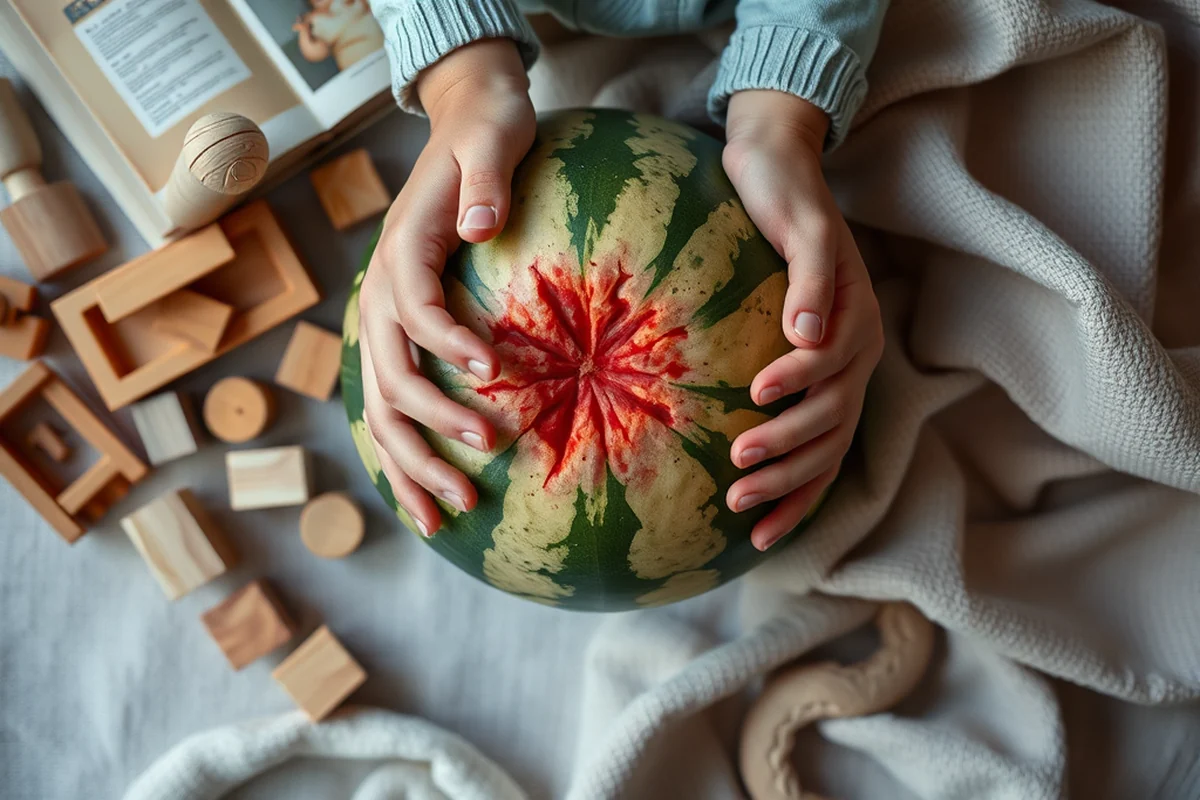
The color and shape of a watermelon can also give you clues about its ripeness. A ripe watermelon should have a deep, dark green color with a smooth, even surface. If the color is patchy or pale, it might not be fully ripe.
The shape is also important. A perfectly ripe watermelon tends to be symmetrical — not too lopsided or oddly shaped. I’ve bought watermelons that looked good from the outside but turned out to be oddly shaped and not as juicy as I expected.
I’ve found that teaching my toddler about the color and shape of watermelons is a great way to help her learn about the importance of visual cues. It’s a simple concept that she can understand and apply to other fruits as well.
The Best Places to Buy and Store Watermelons
Where you buy your watermelon can make a big difference in its quality. I’ve found that farmers’ markets and grocery stores with fresh, local produce tend to have the best watermelons. They’re usually picked at the right time and handled carefully to ensure they’re in prime condition.
When you get home, it’s important to store your watermelon properly. I’ve kept some watermelons in the fridge for a few days, and they’ve stayed fresh and juicy. If you buy a watermelon and don’t plan to eat it right away, it’s best to store it in a cool, dry place — not on the counter or in the sun.
I’ve noticed that watermelons that are stored properly last longer and taste better. I’ve had some that I bought on a hot day and didn’t store them correctly — they turned out dry and not as sweet. It’s a small detail, but it makes a big difference in the end.
🌿 Gentle Approach
For parents who want to take it slow and involve their children in every step of the process, this is the way to go. It’s a learning experience for everyone and builds a connection with the fruit.
⚡ Fast-Track Method
If you need a quick and efficient way to choose a watermelon, this method is perfect. It’s great for busy parents who don’t have time to sit and evaluate every fruit on the stand.
✈️ Travel/Away-from-Home
When you’re on the go or traveling, this method helps you choose a watermelon with minimal effort. It’s ideal for parents who are always on the move and need a quick, reliable way to pick the best fruit.
👶 Multiples
If you have multiple children or need to serve a large group, this approach ensures that you pick watermelons that are consistently ripe and juicy for everyone to enjoy.
🔄 Regression Reset
When you find yourself making the same mistakes over and over, this method helps you reset and start fresh with new strategies. It’s a great way to learn and grow as a parent.
| The mistake | Why it happens | The fix |
|---|---|---|
| Choosing a watermelon based only on appearance. | A watermelon may look ripe on the outside but be dry or underripe on the inside. | Always check the weight, stem, rind, and sound of the watermelon before buying. |
| Buying a watermelon that’s too small. | Smaller watermelons may not be as juicy or sweet as larger ones, and they can be disappointing for your family. | Choose watermelons that are the right size for your needs and that feel heavy for their size. |
| Storing watermelon in the sun or on the counter. | This can cause the watermelon to dry out or become overripe too quickly. | Store watermelon in a cool, dry place, such as the fridge, to keep it fresh and juicy. |
| Not involving your child in the process. | This is a great opportunity to teach your child about the ripeness of fruits and make the experience more interactive and fun. | Involve your child by letting them help choose the watermelon and learn about the signs of ripeness. |
How To Choose A Watermelon
Common Questions
How do I know if a watermelon is ripe without cutting it open?
Can I store watermelon in the fridge?
Is it better to buy watermelon from a farmers’ market or a grocery store?
How can I involve my toddler in the process of choosing a watermelon?
References
- News Flash - Easton, CT (eastonct.gov)
- Washington State Early Learning and Development Guidelines ... (dcyf.wa.gov)
Cite this guide
Choosing a Toddler High Chair (2026). How To Choose A Watermelon. https://chairsage.com/how-to-choose-a-watermelon/
Feel free to cite or share this guide.